







Improve Your Sales Career With Continuous Learning
Are you a lifelong learner? Whether you realize it or not, every day brings new opportunities to learn new skills and grow your career.
The best way you can improve your sales career is through continuous learning. But “improving” means different things to different people.
If you’re fairly new to sales, you may be looking to master all the basics. If you’re more experienced, you may be wondering, What’s next? Even “A-Players” have areas they’d like to improve. In fact, continuous learning is how they reach (and stay at) the top.
This article is about figuring out what skills to work on, embracing continuous learning, and exploring ways to review and analyze your performance so you can keep growing in your profession.
Table of Contents
- Knowing what to improve
- Do you struggle to build rapport?
- Is multitasking a problem?
- Are you engaging prospects and customers?
- How effective is your sales pitch?
- Are you a fast talker?
- Are you making yourself understood?
- Learning is key to growth
- Keep improving your sales career with continuous learning

Knowing what to improve
On the path to perfecting your sales craft, you may need to prioritize what to learn first.
Do you want to refine your rapport-building skills, improve your speech patterns, or prepare more convincing pitches? Perhaps all of the above? Here are some questions to help you evaluate your current skillset.
Do you struggle to build rapport?
Sales and rapport are the peanut butter and jelly of sales. Building rapport is all about your people skills: be an active, engaged listener, have empathy when learning about your buyer’s point of view, and find common interests or values.
However, if you’re fairly confident in your people skills but still struggle with rapport, your problem could be distraction.
In any given sales meeting, you may be rushing to take notes, thinking of the next step in the script, and trying to remember exactly what this particular prospect said last time you talked to them… in other words, constantly multitasking.
Is multitasking a problem?
Probably. To be precise, what people think of multitasking is actually task-switching. Experts say that our brains can only truly handle one task at a time. Imagine a fast-paced game of pinball inside your head.
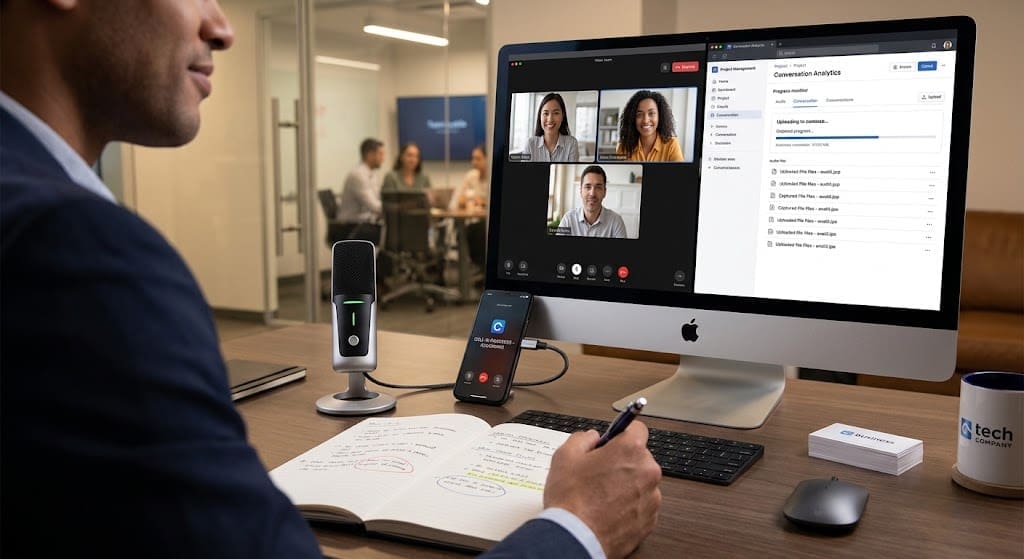
If you want to skip the pinball-mode-task-switching notetaking, record your sales conversations. Later, as you listen to the recording, you can jot down your notes. An even better way is to use a tool that not only records but also provides a transcript of your calls.
The recording/transcribing tool really allows you to focus on what the buyer is saying, without trying to do other things concurrently.
Even with online meetings, your people skills are very important. Use authenticity, empathy, and even a little storytelling to engage your prospects and persuade them to buy. Adam Rubenstein, CEO, TRAQ
Are you engaging prospects and customers?
Perhaps you wonder if your audience is truly interested in what you are saying, or just pretending to listen while watching cat videos (!) or catching up on emails.
As a default, keep the video on and encourage all attendees to do the same. Seeing each other can help people “read the room”, relate to another person and hold their interest.
On your end, always try to transmit a good vibe. Smiling when talking (video on or off) actually encourages the other person to smile, too. Enthusiasm in general is contagious, as long as it feels natural and not forced.
A call recording and analysis solution can also provide a buyer engagement score so you can objectively see how your efforts to engage buyers are paying off.
How effective is your sales pitch?
Battle-tested, management-endorsed sales pitches are great, but let’s get real: sales pros often customize their spiel to the situation and to the buyer, often on the fly. In truth, no conversation is exactly the same as another; there are just too many variables.
So how do you know when to stick to the script and when to take a creative detour? You could start by examining your recent meeting notes. Try to recall your approach to these prospects and customers. What topics seemed to resonate? If you’re using a conversation intelligence tool, use the AI analysis to more easily figure out how effective you are.
Experiment during meetings, too. Next time you talk to a buyer, try asking exploratory questions in a different order and see how that person responds. Try to think like a scientist. What variables can you change? Make note of any interesting findings.
Sales is both art and science, and a little experimentation keeps you ready for any challenge.

Are you a fast talker?
If you tend to get excited about, say, an exciting product feature and cannot wait to tell each buyer every little detail about it, subconsciously hoping that some of your excitement will trickle down to them and they will buy… not so fast.
While you may have learned the product from the inside out, your buyer is new to this and may be overwhelmed by your onslaught of talking points, features and benefits.
Are you making yourself understood?
Pace matters. Credibility grows when you pause frequently, allowing concepts to linger a little longer. Think of an inspiring speaker (even from outside the business world). What do you like about their style? Are they rushing through, or slowing down so their message sinks in?
To compare yourself to your speaking role model, first you need to hear yourself speak. If you aren’t yet using conversation intelligence to record sales calls, a voice memo app on your smartphone can help in the interim.
Listening to yourself provides aha moments – you’ll be able to critique your pace and pitch while becoming aware of any and all filler words (“um,” “like,” “you know” and others)— so you can use them less.
Speaking clearly and concisely is a highly useful skill in the workplace and out. It may not be listed on job postings, but it’s an added advantage you can bring toany job.
Learning is key to growth
At this point, you have a good idea of how to improve your sales career with continuous learning. And you’ve explored the skills that matter to sales professionals.
Authenticity, empathy, active listening, speaking clearly, are all key to working with people and being successful; the good news is, anyone can improve with time and practice.
You may also like
Keep improving your sales career with continuous learning.
Now, you’re ready for a self-assessment of your strengths and weaknesses. The more you know about your gaps, the faster you can fill them. And to assess your performance at scale, listening to conversation recordings really helps.
Opportunities to learn are everywhere. There’s a wealth of free content on the internet: websites, blogs, and YouTube videos galore). If your workplace offers opportunities for targeted coaching and training, take them.
People skills matter more than ever. We all want to feel connected to others, remotely or not, and someone with higher than average social IQ will not only be better at sales, but also enjoy their work life that much more.
Keep Learning

Conversation Intelligence vs Call Recording:
What Actually Moves Revenue
Some of Your Most Important Sales Conversations Never Make It Into Your Tech Stack