Putting Conversation Intelligence to Work: Process, Integration, and Strategy
Quick Summary:
Conversation intelligence delivers its biggest impact when you use it systematically to fix broken processes, make strategic decisions, and integrate buyer reality into your entire sales operation.
This article shows you how to:
- Identify process and enablement gaps by tracking where reps consistently stumble on objections, can’t answer buyer questions, or skip critical discovery steps
- Make data-driven territory and account decisions by matching rep strengths to buyer types, deal complexity, and account characteristics based on actual conversation performance
- Build sustainable habits with weekly, monthly, and quarterly routines that turn conversation data into coaching, process improvements, and strategic insights
- Integrate conversation data with CRM to expose mismatches between what reps log and what actually happened in buyer conversations
Table of Contents
In our previous article, we covered how conversation intelligence helps managers forecast more accurately, diagnose why deals stall, and replicate what top performers do. These use cases deliver immediate impact.
But conversation intelligence becomes even more powerful when you use it systematically to fix broken processes, make strategic decisions, and integrate buyer reality into every part of your sales operation.
This article shows you how to put conversation data to work at the process, integration, and strategic level.
Identify Process and Enablement Gaps
Conversation data reveals where your sales process and enablement materials fail in real buyer conversations.
You built an objection handling guide. Reps still fumble the same objection because the guide addresses what you think buyers say, not what they actually say.
You created battlecards for competitive situations. They focus on feature differences. Buyers care about implementation risk and support quality.
You have a discovery framework. Reps skip the hard questions because they don’t have good language for asking about budget authority or decision process without sounding pushy.
Examples of gaps conversation data exposes:
- Reps get the same objection repeatedly, but handling varies wildly. Your enablement provides one suggested response. Real buyers have different underlying concerns when they raise this objection, so one response doesn’t work for everyone.
- Buyers ask questions reps can’t answer. “How does this integrate with our existing systems?” comes up in 40% of technical buyer conversations. You have integration documentation, but reps don’t know it exists or can’t explain it conversationally.
- Competitive positioning falls flat. Reps use your differentiation messaging, but buyers don’t react. Conversation data shows buyers care about different competitive factors than what your marketing team emphasized.
- Demos don’t address buyer concerns raised in discovery. Rep has a good discovery call, identifies three pain points, then runs the standard demo that covers different topics. Buyers disengage.
How it works in practice:
Identify patterns like the same objection appearing repeatedly across different reps and deals. See how reps handle it: whether they use the language from the objection guide, improvise their own response, or fumble it entirely. If the handling varies wildly and the objection keeps stalling deals, your current enablement content isn’t working.
Catch moments where reps can’t answer buyer questions. When they say “Let me get back to you on that” or pivot away from a topic, those moments form a pattern across dozens of conversations. If 40% of technical buyer conversations include a question about integration that reps struggle to answer, that’s a concrete, data-backed input for your enablement team.
Configure custom analyses to track whether specific discovery topics carry through to later-stage conversations. If reps consistently identify three pain points in discovery but then run a generic demo that covers different topics, the analysis will show that disconnect.
Use these insights to update enablement content with real buyer language instead of internal assumptions, build targeted training around the actual objections and questions that come up most, adjust the sales process where gaps are systemic, and track whether the changes improved conversation behavior by comparing before-and-after results.
Make Data-Driven Territory and Account Strategy Decisions
Not all reps are equally effective in all situations. Conversation data shows which reps handle which buyer types, industries, or deal complexities most successfully. One rep excels with technical buyers (asks detailed questions, handles technical objections confidently, speaks their language) but struggles with executive buyers who want business outcomes, not technical details. Another rep thrives in complex, multi-stakeholder deals (naturally builds consensus, manages competing priorities, navigates politics) but gets frustrated with transactional deals that need simple, fast execution.
Use conversation data for:
- Territory assignment: Match rep strengths to account characteristics. Put reps who excel with technical buyers on accounts where IT drives decisions.
- Account team selection: Put reps on deals where their conversation style fits buyer needs. Your strategic enterprise deal has a risk-averse CFO as the decision-maker? Assign the rep whose conversations emphasize stability and risk mitigation, not the one who leads with innovation.
- Hiring profile refinement: Understand what conversational skills drive success in your specific market. You might discover that your best reps share conversation patterns you never put in a job description.
How it works in practice:
Review conversation scores, sentiment trends, and AI-generated analysis across a rep’s full portfolio to identify where each rep excels and where they struggle. One rep may consistently score high in discovery conversations with technical buyers but lose momentum in executive-level discussions. Another might thrive in complex multi-stakeholder calls but rush through simpler, transactional opportunities.
View deal progress alongside conversation data to spot correlations between conversation quality and deal outcomes by deal size, industry, or stage. If a rep’s deals consistently stall after stage three, the conversation data from those later-stage meetings usually reveals why: weak negotiation skills, inability to handle procurement conversations, or failure to expand the conversation beyond a single champion.
Use this data proactively to assign accounts based on a rep’s demonstrated strengths, pair reps with mentors who complement their skill gaps, and refine hiring profiles based on the conversation patterns that drive wins in your specific market rather than just the traits that look good on a resume.
How to Actually Use Conversation Data (Not Just Collect It)
Most managers have access to conversation intelligence data but don’t use it systematically. They look at it when something goes wrong or when they remember to check. Build conversation data into your routine:
Weekly (30 to 60 minutes):
Review the AI analyses for your top deals closing this quarter. Check the Buyer Sentiment Score trend, skim the most recent conversation summary, check the Risks Analysis, and note any unresolved action items. For a pipeline of 10 to 15 active deals, this takes about 20 minutes.
Identify coaching priorities. Look for deals where the Call Score and Sentiment Score dropped between conversations or where key topics like budget, timeline, or decision process are absent from recent summaries. These are the conversations worth digging into and the reps who need targeted coaching that week.
Check recently stalled deals. Pull up the conversation history and let the data tell the story. Most managers build this into their Monday morning routine or use it as prep for weekly pipeline meetings.
Monthly (about 1 hour):
Compare won versus lost deals from the previous month. Did the wins have stronger discovery conversations? More decision-maker involvement? Better objection handling?
Look at team-wide patterns. Review the most common objections appearing across conversations, check whether your value messaging is resonating or falling flat (Buyer Sentiment Scores during value discussions will tell you), and assess whether reps are following the sales process or skipping steps.
Track whether coaching initiatives from the previous month changed behavior. If you coached a rep on spending more time in discovery, check whether their recent conversations reflect that change. Measure coaching impact with evidence, not assumptions.
Quarterly:
Compare conversation patterns across quarters to measure progress. If your coaching focus last quarter was improving discovery quality, the data will show whether discovery conversations got longer, whether reps are asking better questions, and whether that translated into higher Buyer Sentiment Scores and improved close rates.
Benchmark specific skills across the team over time. Track how well reps handle pricing objections quarter over quarter, or whether new reps are ramping faster.
Use quarterly insights for strategic planning: decide which enablement initiatives to prioritize, identify skill gaps to address in upcoming training, evaluate whether sales process changes improved actual buyer conversations, and review the competitive and market intelligence emerging from what buyers consistently talk about.
Combining Conversation Data with CRM Data
Conversation intelligence data is most powerful when combined with CRM data:
- CRM tells you: Deal stage, value, close date, number of activities logged
- Conversation data tells you: What actually happened in those activities
Together, they reveal truths neither dataset shows alone:
- Activity doesn’t equal progress. Rep logs six calls with a prospect. CRM shows healthy activity. Conversation data shows all six calls were short, logistical discussions about scheduling. No substantive discovery or value conversation happened.
- Sales stages don’t reflect buyer reality. Deal is in “Proposal” stage. Conversation data shows the buyer never confirmed budget, decision process, or success criteria. You’re presenting a proposal to someone who hasn’t committed to solving the problem.
- Deal value isn’t justified by conversation substance. $200K deal in pipeline. Conversations show rep discussed only one use case and never confirmed scope, scale, or business impact. The deal value is rep aspiration, not buyer indication.
- Close dates don’t align with buyer timeline signals. Rep forecasts close date as end of quarter. Buyer said “We’ll need to run this by our board in Q3” in the last conversation. Rep either missed this signal or ignored it.
How the integration works:
When a conversation is recorded and analyzed, the recording, transcript, summary, and AI-generated notes automatically attach to the corresponding contact or deal record in your CRM. You don’t have to switch between systems to get the full picture. You can see both the CRM data (deal stage, value, close date, activity count) and the conversation reality (what actually happened in those activities) in a connected workflow.
This integration exposes critical mismatches. A deal may show six logged activities in your CRM, but the analysis reveals those were all short scheduling calls with no substantive discovery or value conversation. A deal might be in “Proposal” stage, but the conversation data shows the buyer never confirmed budget or decision process. These are the disconnects that break forecasts, and the integration makes them visible.
Action items identified during conversations are automatically surfaced and follow-up emails are drafted, ensuring that commitments made during conversations don’t fall through the cracks. The result is a single, connected view where CRM data and conversation intelligence work together instead of existing as separate, often contradictory sources.
Avoid These Common Mistakes
- Mistake 1: Treating conversation intelligence as just a coaching tool
Coaching is valuable, but conversation data also provides forecasting signals, competitive intelligence, market research, and process diagnostics. If you’re only using it for coaching, you’re missing most of the value. - Mistake 2: Waiting for perfect data before acting
You don’t need to analyze every conversation to get value. Start with high-value deals and obvious patterns. Review your top 10 deals this quarter. Identify your most common objection. Compare your best rep to team average on one specific skill. Perfect analysis is the enemy of useful insights. - Mistake 3: Analyzing data but not changing behavior
Insights without action waste everyone’s time. Every analysis session should lead to a specific change: coaching intervention, process update, enablement improvement, or strategic decision. If you discover reps consistently skip budget qualification, don’t just note it. Change your discovery framework, role-play the conversation, and check if behavior improves next month. - Mistake 4: Making it the manager’s job alone
Reps should review their own conversations and self-coach. Enablement should use conversation data to improve content and training. Sales leadership should use conversation data for strategic decisions. The more people who engage with the data, the more value your organization gets from it.
Start With One Use Case
Don’t try to do everything at once. Pick the use case that solves your biggest pain point right now:
- Forecast accuracy problems? Start with weekly deal health reviews.
- Too many stalled deals? Analyze conversation patterns before stalls.
- Inconsistent rep performance? Compare top performers to team average.
- Enablement content not working? Track which objections reps struggle with.
- Wrong reps on wrong accounts? Review conversation performance by buyer type.
Master one use case. Build the habit. Then expand.
Conversation intelligence gives you data most sales organizations have never had access to: what actually happens in buyer conversations. The difference between winning teams and struggling teams isn’t access to the data. It’s what you do with it.
Stop guessing. Start knowing.
About the Author
Adam Rubenstein is the CEO of TRAQ, a conversation intelligence platform for sales and customer-facing teams. He works with sales leaders to turn real conversations into structured insights, repeatable coaching, and measurable improvement, helping teams execute consistently and scale what works. Connect with Adam on LinkedIn or learn more at traq.ai.
Learn How TRAQ Transforms Sales Teams
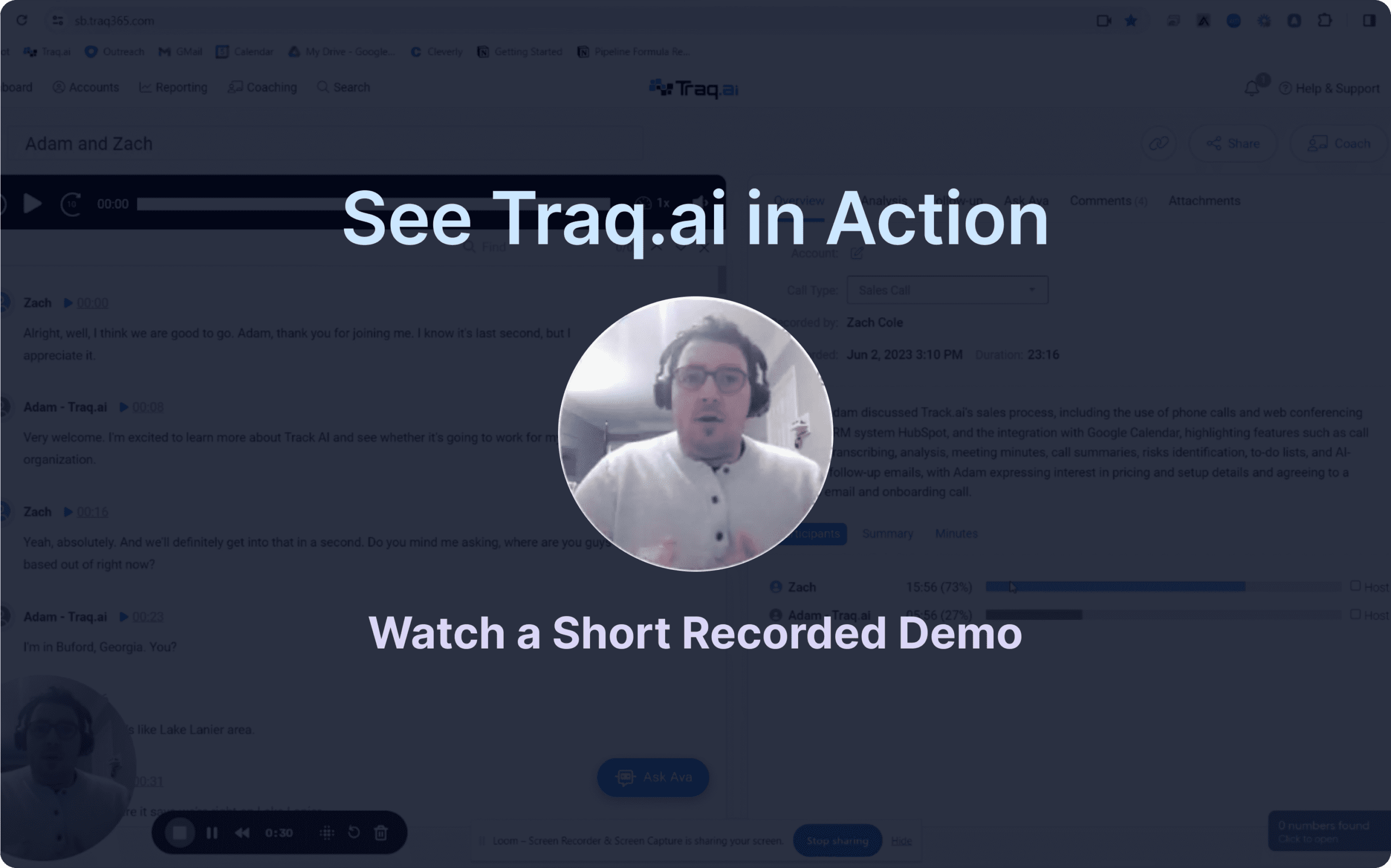
See TRAQ in action in this 5-min intro
Keep Learning

How Can Sales Managers Leverage Conversation Intelligence Data?

What ROI Should You Expect from Conversation Intelligence Software?