







From Critic to Coach: How AI-Powered Conversation Intelligence Is Redefining Sales Coaching
Quick Summary:
Sales coaching is broken. Managers only hear 4-6% of their team’s calls, and thousands of recorded conversations go unanalyzed. AI-powered conversation intelligence closes that gap by turning every call into actionable, evidence-based coaching insight.
Key takeaways:
- Recording isn’t enough. Without AI analysis at scale, call recordings are just expensive storage. Patterns and nuances hide in volume that no manager can manually review.
- AI catches what managers miss. Traq identifies subtle behaviors like follow-up depth in discovery questions, connecting those patterns to win rates across the entire team.
- Coaching shifts from criticism to comparison. Traq’s coaching library lets managers pair a rep’s call with a real example of a top performer handling the same situation, removing defensiveness from the conversation.
- Self-guided coaching changes rep buy-in. Reps review their own AI-generated feedback privately before the manager conversation, creating a low-pressure environment that drives genuine engagement.
- The results are measurable. Within 90 days of adoption, Traq customers report win rate improvements of 22-28% and reps nearly 90% more likely to hit quota.
Three non-negotiables for success: full team adoption from day one, daily self- guided coaching as a habit, and customized call analysis tailored to your sales process.
The Coaching Gap Trap
Most sales managers sit in on 4-6% of their team’s calls. They coach based on what they happen to hear, filtered through their own experience and bias. The rep gets feedback that sounds like an opinion. The rep pushes back. The conversation stalls. Nothing changes.
Recording calls was supposed to fix this. It didn’t. Organizations now sit on thousands of hours of recordings that no human has time to review. The data exists. The insight doesn’t. That’s the trap.
That gap between recording and understanding is where most sales coaching breaks down.
Volume Without Analysis Is Just Storage
Here’s the uncomfortable truth: it doesn’t matter how many calls your organization records if nobody can analyze them in volume, within the context of each conversation.
A manager reviewing a single call can catch the obvious misses. Did the rep ask for next steps? Did they handle the pricing objection? But context lives across hundreds of calls. Patterns hide in scale.
AI-powered conversation intelligence changes the math entirely. Instead of sampling a handful of calls per rep each quarter, the technology analyzes every conversation automatically. It catches nuances and details that even experienced coaches miss:
- How a rep builds (or fails to build) rapport in the first 90 seconds
- Whether discovery questions actually uncover pain or just check a box
- The specific language patterns that create urgency versus the ones that stall deals
- Talk-to-listen ratios in context, not just as a raw metric
The Discovery Question Problem
One pattern Traq’s conversation intelligence surfaces consistently is the difference between discovery questions that check a box and discovery questions that actually uncover pain.
A manager listens to a call and hears the rep ask all the right questions: “What’s your biggest challenge right now?” “How are you handling that today?” “What happens if nothing changes?” On the surface, it sounds like solid discovery. The box gets checked.
But when Traq analyzes that same call, it flags something the manager would miss: the rep never followed up. They asked the question, got an answer, and moved on to the next item on their list. There was no “Tell me more about that” or “How does that impact your team day to day?” No curiosity. Just a checklist.
Scale that across an entire team over a full quarter. Traq identifies which reps consistently dig deeper, asking second and third-level follow-ups that uncover the real impact of the problem, versus which reps run through discovery like a script. The reps who
dig deeper close at significantly higher rates, and the data makes that connection visible.
No manager has the time or ability to listen to hundreds of calls and track follow-up depth across every rep. That’s exactly the kind of pattern Traq was built to find: not just whether discovery happened, but whether it actually worked.
From “Here’s What You Did Wrong” to “Here’s What the Best Reps Do Differently”
Traditional coaching is backward-looking and critic-driven. The manager tells the rep what went wrong. The rep feels judged. Defensiveness kicks in.
AI flips the model.
Because conversation intelligence analyzes the entire team’s calls, it identifies the specific behaviors and traits of your highest-performing salespeople. Not generic best practices from a book. Your organization’s own winning patterns, drawn from your buyers, your market, your sales cycle.
That means a coaching conversation shifts from “You should have done X” to “Here’s what our top closers consistently do in this exact situation, and here’s where your approach differs.”
The feedback becomes objective. Behavior-focused. Impossible to argue with because it’s rooted in the organization’s own data.
How Traq’s Coaching Library Makes This Real
Traq gives managers the ability to evaluate calls against almost any criteria, including the specific behaviors that drive wins. When a call is run particularly well, a manager can add it to the coaching library, tagged by the situation or skill it demonstrates. Over time, this builds a collection of real examples that show the team what good looks like.
This isn’t generic “best practice” content pulled from a sales methodology textbook. These are real calls from your organization, with your buyers, in your market. When a rep watches a library call, they recognize the context: the type of prospect, the objection, the stage of the deal. They may have even been on the call themselves. That recognition is what makes the learning stick.
From a manager’s perspective, preparing for a coaching session becomes a completely different exercise. Instead of pulling up a rep’s call and building a list of what went wrong, the manager can pair that call with a library example that shows how a top performer handled a similar situation. The coaching conversation shifts from criticism to comparison: “Here’s how Sarah navigated that same pricing pushback last month” rather than “You should have done X.”
This approach works because it removes the defensiveness that kills most coaching conversations. Reps aren’t being told they failed. They’re being shown a path forward by someone on their own team, in a situation they understand. It’s much easier to learn from a strong example than to reverse-engineer improvement from a list of mistakes.
Coaching Gets More Human, Not Less
There’s an irony most people miss. AI doesn’t make coaching robotic. It makes it more human. When the analysis is handled by AI, the manager and the salesperson aren’t debating what happened on the call. The data settles that. Instead, they spend their time on why it matters and how to improve.
The coach stops being a critic armed with a scorecard. They become a skill-builder armed with evidence.
Reps engage differently, too. Traq’s approach to self-guided coaching lets salespeople review their own AI-generated feedback privately, in a low-pressure environment, before the manager conversation even begins.
No “Big Brother” feeling. Just actionable insight they can act on immediately.
Why Reps Actually Embrace It
Let’s be frank: almost no salesperson walks into their manager’s office and says, “I’m struggling, and I need help.” That conversation rarely happens, no matter how supportive the culture.
Self-guided coaching changes the dynamic entirely. It’s like watching game film in the privacy of your own study. The rep can see where they performed well and where they fell short, without anyone looking over their shoulder. There’s no judgment attached. Just insight they can act on.
It also helps to reframe what coaching actually is. Every rep needs it, on every skill, regularly. LeBron James still goes to practice every day and works on foul shots, dribbling, layups, and passing. Those are fundamentals, and he never stops refining them. Traq’s self-guided coaching works the same way: reinforcing fundamentals while surfacing opportunities for higher-level performance.
One skill that comes up often is building urgency. Even experienced reps struggle with it, and Traq’s call evaluations consistently flag it. Urgency isn’t something you learn once. It’s something you sharpen through repetition and reinforcement. Reps get
reminded, they adjust, and over time, they get measurably better.
The feedback from Traq customers is consistent: reps genuinely appreciate the continuous, private feedback loop. More importantly, they see the results in how they sell.
Experience-Based Coaching vs. Evidence-Based Coaching
This is the real shift. For decades, sales coaching has been driven by the manager’s personal experience. “When I carried a bag, here’s what worked for me.” That approach has a ceiling. It doesn’t scale. It carries bias. And it depends entirely on the quality of the individual manager.
Evidence-based coaching, powered by AI conversation intelligence, removes that ceiling:
| Experience-Based | Evidence-Based (AI) | |
|---|---|---|
| Data source | Manager’s memory and limited call samples |
Every conversation, analyzed automatically |
| Feedback basis | Opinion and anecdote | Behavioral patterns from real data |
| Benchmarking | “What I think good looks like” | “What actually works here, proven by results” |
| Scalability | Limited by manager’s time | Unlimited |
| Rep buy-in | Often low (feels subjective) | Higher (hard to argue with evidence) |
The Management Skills Gap
There’s a reality that doesn’t get talked about enough. Many sales leaders land in management because they were great salespeople, not because they were natural teachers or coaches. Those are very different skill sets. You end up with leaders who know what good selling looks like but struggle to diagnose problems and guide their team toward improvement in a structured, repeatable way.
Traq changes that equation. The platform identifies where each rep can improve and makes specific suggestions on how to get there. A manager who previously had no clear framework for coaching now has one built into every call. And because the analysis happens automatically across the entire team, it scales in ways manual coaching never could.
They go from coaching infrequently with uncertain focus to having a system that knows exactly what to address, for every rep, after every conversation.
There’s another element that matters just as much: salespeople want this. They want to be coached up. They want to sharpen their skills, close more deals, and earn more money.
That motivation has always been there. What’s been missing is a platform that can meet them where they are and give them a clear path forward. Traq provides that, and the adoption reflects it. When reps see that the feedback is specific, continuous, and actually helping them sell better, they lean into it.
The Numbers
The results show up quickly. Within 90 days of adoption, Traq customers consistently report sales teams improving their win rates by 22 to 28 percent. Reps using the platform are nearly 90 percent more likely to hit quota for that period.
Those numbers reflect what happens when coaching becomes continuous, specific, and evidence-based, paired with a sales team that’s hungry to improve.
Making It Work: What Implementation Actually Looks Like
Adopting conversation intelligence isn’t just a software purchase. It requires a shift in coaching culture.
- For VPs of Sales: Stop asking managers how many calls they reviewed this week. Start asking what behavioral patterns they identified across the team and what they’re doing about them.
- For Sales Enablement Teams: Use AI-surfaced insights to build training around your own organization’s winning behaviors, not generic content. When the training comes from real calls your reps recognize, adoption follows.
- For Frontline Managers: Lean into the self-guided coaching model. Let reps come to the conversation having already seen their own AI feedback. Your job becomes guiding the development plan, not delivering the diagnosis.
Three Non-Negotiables for the First 90 Days
- Full team adoption from day one. No exceptions, no stragglers. A partial rollout creates gaps in your data and sends the wrong message about how seriously leadership takes the platform. Take advantage of Traq’s onboarding resources to get everyone up and running quickly.
- Make self-guided coaching a daily habit. Create a call review requirement and attach accountability to it. One approach that works well: add a “coaching completed” label to every call, confirming the rep has reviewed their self-guided coaching
feedback. That simple step turns self-guided coaching from optional into part of the daily process. That’s where the real value starts compounding. - Customize the analysis to your sales process. This is the most common mistake organizations make in the first 90 days: treating Traq like a generic tool. The platform is built to be customized. Work with Traq to develop custom analyses that
evaluate calls around your specific sales process, your qualification criteria, and your competitive landscape. When the feedback is tailored to how your team actually sells, reps pay attention to it. When it’s generic, it gets ignored.
The organizations that see the fastest results commit to all three from the start. Those habits drive the behavioral improvements that lead to higher win rates and stronger quota attainment.
The Bottom Line
AI will never replace the human connection between a coach and a salesperson. But it will replace the guesswork.
Organizations that record calls without analyzing them at scale are sitting on an untapped goldmine. The ones that use AI to turn those conversations into objective, behavior-focused coaching insights will build stronger reps, faster ramp times, and a
coaching culture that actually sticks.
The shift from critic to coach starts with evidence. Traq’s conversation intelligence and coaching library give sales leaders the evidence on every single call.
Ready to see what AI-powered coaching looks like in practice? Book a demo of Traq’s coaching library or try Traq free today.
About the Author
Adam Rubenstein is the CEO of TRAQ, a conversation intelligence platform for sales and customer-facing teams. He works with sales leaders to turn real conversations into structured insights, repeatable coaching, and measurable improvement, helping teams execute consistently and scale what works. Connect with Adam on LinkedIn or learn more at traq.ai.
Learn How TRAQ Transforms Sales Teams
See TRAQ in action in this 5-min intro

Keep Learning

Conversation Intelligence vs Call Recording:
What Actually Moves Revenue
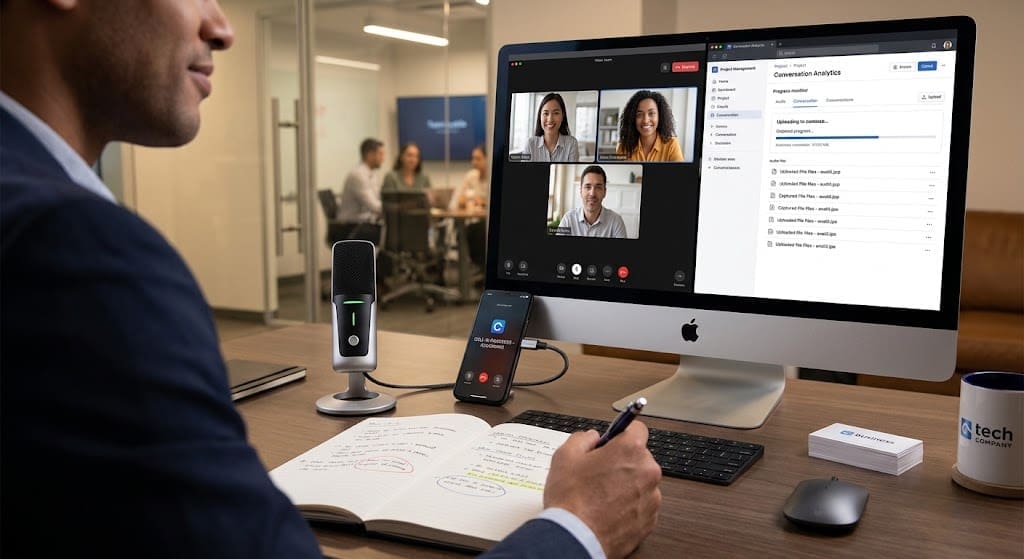
Some of Your Most Important Sales Conversations Never Make It Into Your Tech Stack