


10,000+ Calls a Day. 300+ Reps. A Clear Picture of What's Working.
How a large, multi-division call center uses TRAQ to improve sales performance, customer satisfaction, coaching, and management decisions.
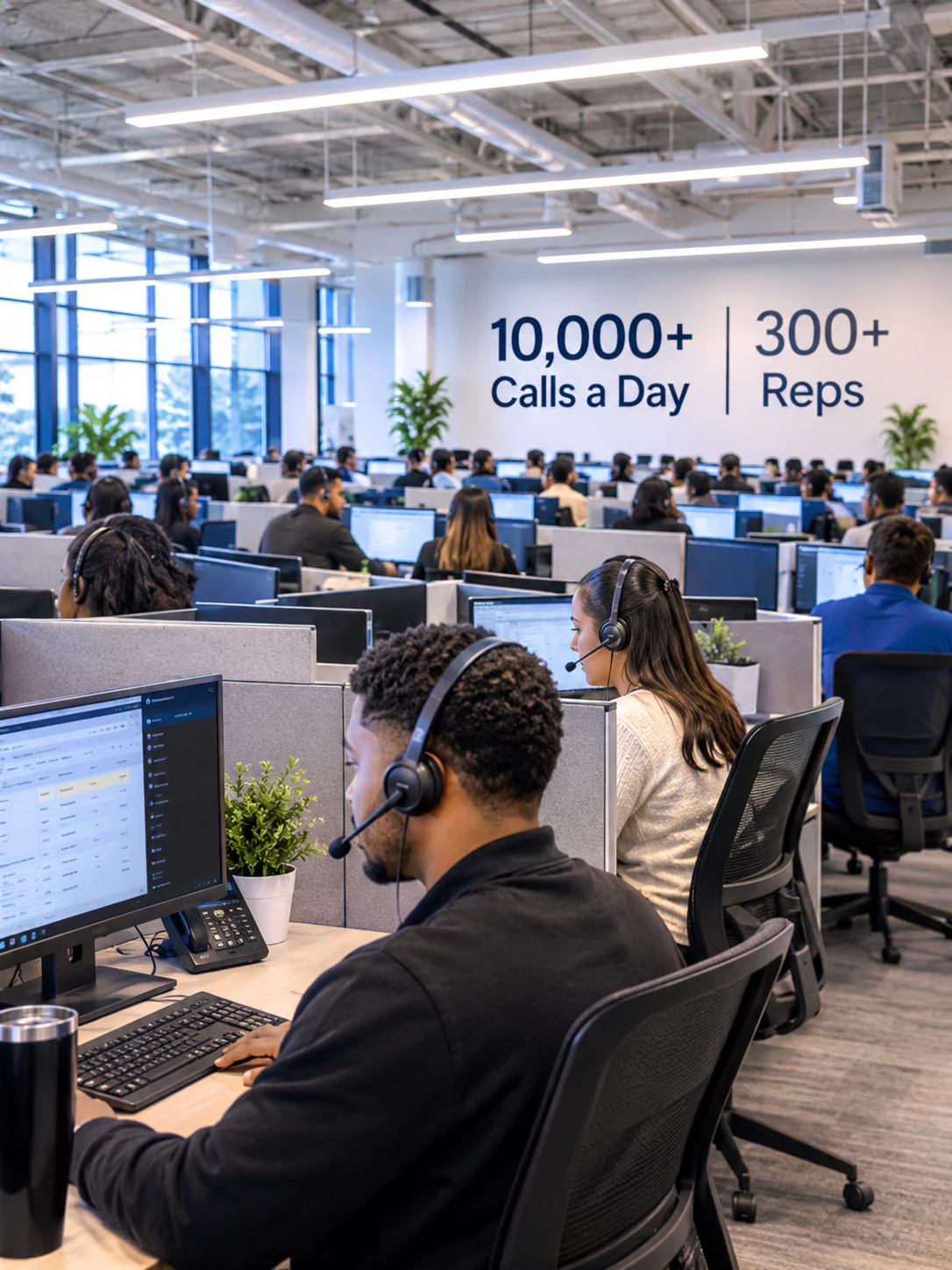
When a sales call stalls, it's easy to assume the rep needs coaching. But what if an entire team gets stuck at the same point?
See how a call center with 300+ representatives across four divisions uses TRAQ to answer that question. With more than 10,000 sales and service calls a day, leadership can see which messages move buyers forward, what top performers do differently, and where a change in coaching or process would help.
Inside the case study, you'll see how the company
Tested sales messages against two outcomes
Whether early calls advanced the sale and whether later calls won the business.
Used team performance to guide decisions
Identified effective coaches and reassigned some supervisors to roles that better fit their strengths.
Evaluated customer service calls against procedures
Including whether the issue was resolved and how the customer responded.
Common questions about conversation intelligence at scale
How can a call center tell whether a rep needs coaching or a script needs to change?
Look at who struggles with the same step. When one rep repeatedly misses it and peers handle it successfully, a supervisor has a specific behavior to coach. When the same issue appears across teams, management has a reason to examine the script, message, or process. In this case study, TRAQ helped leaders see those patterns across four divisions.
How can a call center measure which sales messages work?
Compare the message used with the outcome appropriate to that stage of the sale. For early-stage calls, this company examined whether the prospect advanced to the next stage. For later-stage calls, it examined whether the business was won. That gave managers a practical basis for deciding which messages to keep testing or change.
Can AI evaluate sales and customer service calls differently?
Yes. TRAQ configured the evaluations around each division's scripts and expectations. On sales calls, it assessed behaviors such as handling objections and securing a next step. On service calls, it examined whether the rep followed the procedure, resolved the issue, and recognized frustration or satisfaction expressed by the customer.
Can calls that last only a few minutes provide useful coaching insights?
Yes. Calls in this operation typically lasted 2½ to 6 minutes. Even a short exchange could show how a rep responded to an objection, whether a buyer agreed to a next step, or whether a customer said an issue was resolved. Comparing those moments across reps helped managers identify behaviors they could share with the team.
Get the call center case study
See exactly how this multi-division call center uses TRAQ to improve sales performance, customer satisfaction, coaching, and management decisions.
See what TRAQ can show your team
Turn every call into structured data that feeds your CRM, forecasts, and coaching.